
N Endorsement
Tanker study guide
A tanker’s load can move even when the vehicle body is secure. Study liquid movement and vehicle stability alongside the license requirements, inspection procedure and hazards of the particular product.
Study areas: Tank vehicles, general knowledge, and hazardous materials when applicable
SECTION 01
A tank endorsement is not limited to fuel trucks
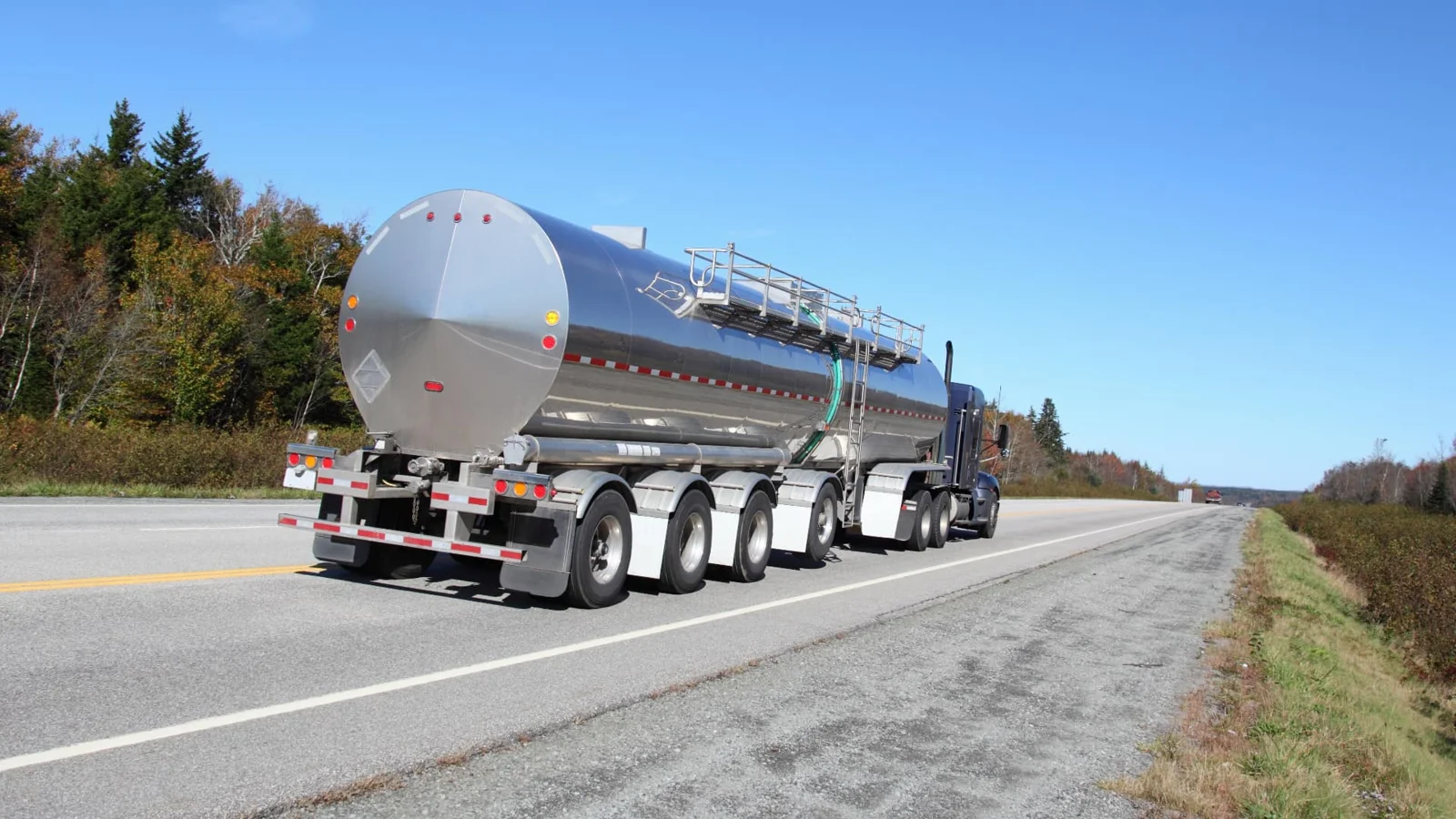
The federal tank-vehicle definition includes a commercial motor vehicle carrying liquid or gas in tanks with individual rated capacities greater than 119 gallons and an aggregate rated capacity of 1,000 gallons or more, permanently or temporarily attached to the vehicle or chassis. An empty storage-container tank not designed for transport and temporarily attached to a flatbed is excluded from that definition.
The definition, not simply the word tanker, determines when the tank qualification applies. Hazardous-material transportation can add an H requirement, and the combined tank and hazardous-material qualification is X. Match the endorsement to the vehicle and product before operating.
Key points
- N is the tank endorsement.
- Tank qualification and hazardous-material qualification are separate questions.
SECTION 02
Expect the load to keep moving
When a partially filled tank accelerates, brakes or changes direction, the liquid can move relative to the vehicle. That movement can continue after the driver changes inputs, making a second push feel unexpected. Smooth control is important because abrupt inputs can compound the movement.
Baffles interrupt front-to-back liquid movement, but they do not eliminate it and do not prevent side-to-side movement. Compartments divide the tank into separate sections. Neither arrangement makes the vehicle immune to rollover. Learn the actual tank configuration and the product’s behavior.
Key points
- Baffles do not remove sideways surge.
- A partially filled tank is not automatically easier to control.
SECTION 03
Slow before the curve
Tank vehicles often have a high center of gravity, and liquid movement can increase instability in a turn. Reduce speed before entering a curve and use smooth steering. A posted advisory speed should not be treated as a guarantee of safety for your particular loaded tanker.
Avoid sudden lane changes and hard corrections. Maintain space that lets you respond gradually rather than being forced into an abrupt stop. Adjust for road surface, weather, visibility and the actual load. A baffle or compartment is not a reason to drive aggressively.
Key points
- Control speed before the turn.
- Plan enough space for gradual adjustments.
SECTION 04
Inspect for containment, not tiedown counts
Inspect the tank, its mountings, closures, valves and hoses using the procedure for the equipment and product. Check for leaks and damaged fittings before departure. Loading limits, expansion space and product compatibility depend on the tank and material; do not use a universal fill percentage.
The general article-securement provisions of 49 CFR 393.106 exclude bulk commodities with no fixed shape when carried in a structural tank or similar device. That exclusion does not make leaking tanks or insecure equipment acceptable. If a cargo tank is used for hazardous material, federal railroad-stop rules can apply whether it is loaded or empty.
Key points
- Use the product-specific loading and expansion instructions.
- Empty does not always mean exempt from a railroad stop.
Sources and review
Key facts are checked against the federal regulations linked below. Rules can vary by state, so confirm details in your state’s current CDL manual. This is independent study material, not official licensing instruction.