

Subject practice
General Knowledge
17 questions in this subject. Quiz rounds include up to 10 questions.
Written test practice & flashcard games
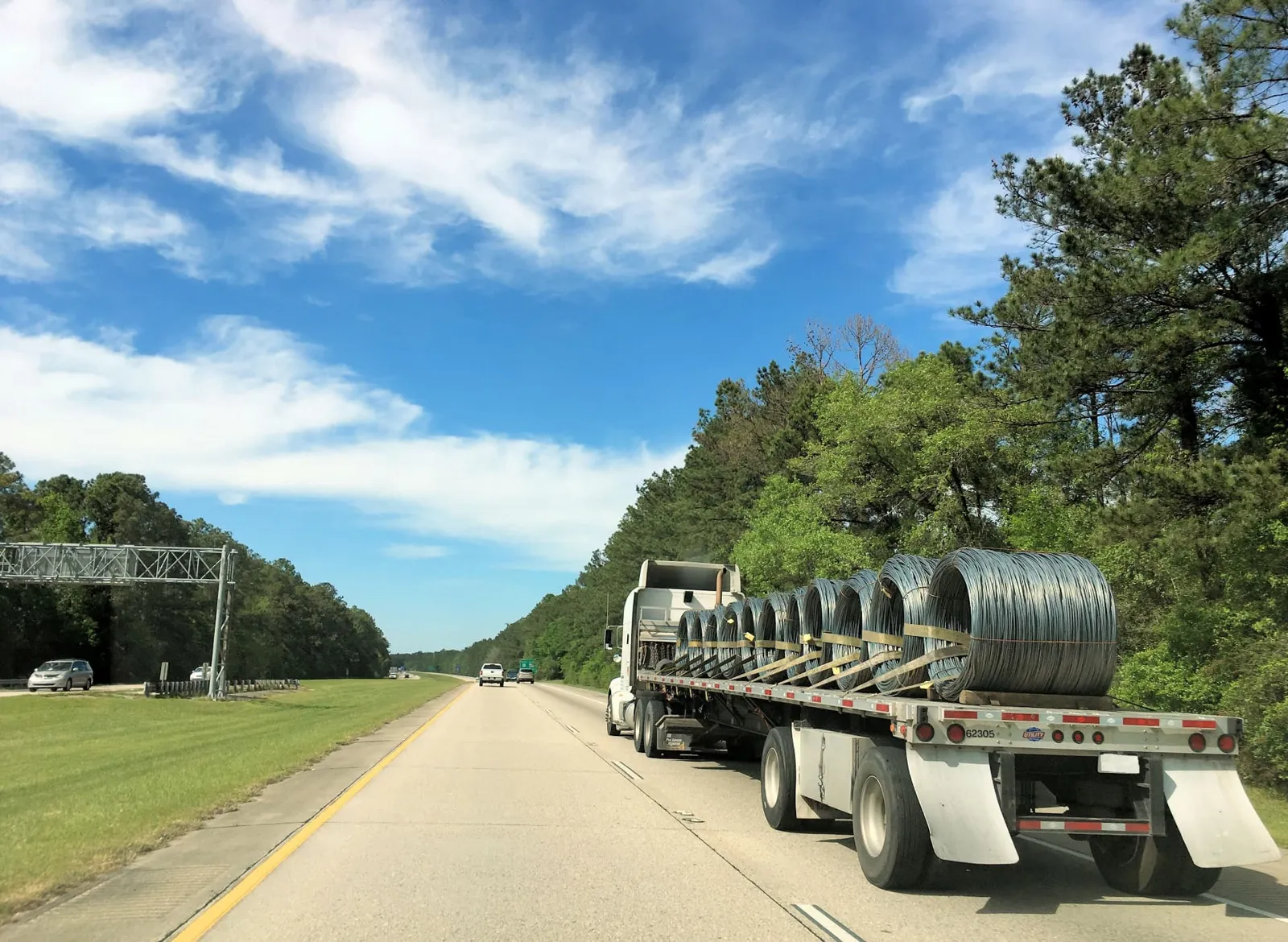
← All vehiclesGeneral knowledge, cargo securement, combination vehicles and air brakes when equipped. There is no separate flatbed endorsement.
Subject practice
17 questions in this subject. Quiz rounds include up to 10 questions.
Subject practice
7 questions in this subject. Quiz rounds include up to 10 questions.
Subject practice
8 questions in this subject. Quiz rounds include up to 10 questions.
Subject practice
10 questions in this subject. Quiz rounds include up to 10 questions.
Mixed practice
42 questions across 4 subjects, shuffled into one round.
Practice only, not a separate licensing exam.
Before you practice
An inspection is a decision about whether the vehicle is safe to move, not simply a list of parts to name. Start with the vehicle’s condition and surroundings, then examine the major systems in a consistent sequence. Look for damaged or loose components, leaks, tire defects and equipment that will not operate correctly. A normal dashboard reading does not cancel a defect found outside the cab.
Federal minimum tread depths are 4/32 inch on front tires and 2/32 inch elsewhere. Measure in a major groove, away from raised tie bars. A tire can meet that measurement and still be unsafe because of separation, exposed cords or an audible leak. Think of the number as one check within the inspection, not a complete approval of the tire.
While driving, space and early observation give you time to make gradual decisions. Greater speed, a heavy vehicle and poor traction can increase the distance needed to stop. Scan ahead and use mirrors without staring at either. Plan a turn for the rear wheels and rear overhang as well as the front of the vehicle. Your state’s manual supplies the specific test procedures and recommended following-distance method.
A front tire has adequate tread, but you can hear air escaping from it. Is the tread measurement enough to continue?
Why it matters: No. Tread depth and tire condition are separate checks. An audible leak is a defect that must be addressed; memorizing the tread minimum does not make the tire safe.
Before you practice
Begin with the article’s weight, length, shape and tendency to move. Blocking can prevent forward travel; chocks or a cradle can restrain rolling. Then determine the tiedown count and the aggregate working load limit. These are separate requirements, and commodity-specific rules can supersede the general arrangement. A closed cargo body does not by itself prove that the load is restrained.
For a general article not blocked forward, a length of 5 feet or less and a weight of 1,100 pounds or less permits one tiedown under the count rule. Short but heavier articles need two, as do articles longer than 5 feet through 10 feet. Beyond 10 feet, start with two and add one for every additional 10 feet or part. Aggregate WLL must be at least 50% of cargo weight, with each tiedown’s contribution determined by its attachment method.
Inspect accessible cargo before departure and within the first 50 miles. Recheck at a duty-status change or after 3 hours or 150 miles, whichever comes first. The regulation has exceptions for sealed or impracticable-to-inspect loads; it does not excuse unsafe transport.
An unblocked 20-foot general article weighs 10,000 pounds. What two calculations do you need?
Why it matters: The general count rule requires at least 3 tiedowns. Separately, aggregate WLL must be at least 5000 pounds. Three tiedowns are not enough if their counted WLL is inadequate or the arrangement does not restrain the load.
Before you practice
A tractor and trailer are connected mechanically, pneumatically and electrically. Each connection needs its own check. Inspect the fifth wheel and kingpin area, confirm the lock visually, and verify the air and electrical connections using the approved coupling sequence. A pull check alone cannot establish that every part is correctly connected.
In a turn, the trailer’s wheels can follow an inside path relative to the tractor. A sudden change of direction can also magnify movement toward the rear of the combination. Plan space for the whole vehicle, reduce speed before the turn and avoid abrupt steering corrections. Do not use the trailer hand valve to try to straighten a developing skid; follow the skid guidance in your state’s manual.
The tractor protection system is intended to protect the towing vehicle’s air supply when a trailer separates or develops a major loss of air. Know the controls, lines and inspection method for your actual combination. Coupling, braking and cargo distribution must all be sound before the vehicle can be considered ready.
A trailer passes a pull check, but the driver has not looked at the fifth-wheel lock. Is coupling complete?
Why it matters: No. The pull check is part of a sequence, not a substitute for inspecting the lock and connections. Complete the equipment-specific checks before moving.
Before you practice
The compressor supplies air to reservoirs, and the service brake controls use that stored air to apply braking force. The supply can be lost through leaks or repeated brake applications faster than it is restored. This is why watching pressure and recognizing the warning signal are different tasks from judging whether the last stop felt normal.
For vehicles covered by FMVSS 121, a continuous low-air warning is required below 60 psi in the service reservoir system with the ignition on. Equipment and test procedures can differ, particularly on older vehicles. Use the current state manual and the vehicle’s approved procedure for leakage, pressure build-up and warning tests rather than borrowing a threshold from another vehicle.
Spring brakes are commonly held released by air pressure. Losing that pressure allows the springs to apply them. Do not wait for automatic application as a way to decide when to stop. Respond to the low-air warning by bringing the vehicle to a safe stop while control remains available. ABS can help prevent wheel lock, but it does not supply missing air or permit a smaller safety margin. Air brakes are not a federal endorsement; license restrictions depend on the testing and equipment used.
The low-air warning comes on, but the truck still slows when you press the pedal. Should you finish the trip?
Why it matters: No. A successful brake application does not prove that enough air remains for later stops. Stop safely and have the cause investigated instead of waiting for spring brakes to apply.
These are independent study explanations. Confirm state-specific procedures in your current state CDL manual and use the approved instructions for your vehicle. Practice does not replace required training or licensing tests.
Practice questions are for study only. Always study your state’s official CDL manual — some details vary by state.